Positioning Guide
Welcome to our TFT positioning guide, where I will cover just about everything I know about placing your units. This will span everything from the basics and fundamentals, to the more complex micro decisions.
I’ve been playing TFT ever since the beta, and have peaked my LP in Challenger in the early sets. While I don’t push all the way to Grandmaster/Challenger anymore, I can comfortably hit Master in just about any set. I won’t be the absolute best player to learn from, but I can provide a lot of insightful tips you might not think about.
With the intro out of the way, let’s get right into the guide, starting with the basics.
Basic Positioning – The Fundamentals
Every concept or skill you learn in TFT has an underlying principle or fundamental that you should understand. While a lot of this may seem like common sense, having a good grasp of the basics gives you more insight into more advanced topics.
Frontline + Backline
The absolute basics when it comes to positioning is about placing your defensive units (tanks) in the frontline (first two rows) and your ranged/carry units in the backline (bottom two rows).
*If your carry unit is melee, you will want to place them in the second row instead.*
So far so good, place the tanks in front, and the ranged squishies in the back.
If you’re a beginner learning about the set, how do you know what constitutes a tank vs a squishy? This is something you’ll learn fairly quickly, but it’s a combination of their base stats (Armor, MR, Health), Ability, and Traits.
Common Frontline Identifiers
- High Base Health
- Higher Base Armor/MR (30+ for 1-3 Cost units, and 50+ for 4-5-Cost units)
- Defensive Abilities (Damage Reduction, Shields, Taunts)
- Tank Traits (Behemoth, Bruiser, Warden, etc)
- Shorter Range (1-2)
Common Backline Identifiers
- Lower Base Health
- Lower Base Armor/MR (15-25 for 1-3 cost units, and <50 for 4-5 Cost units)
- Offensive Abilities (Damaging Abilities, long range abilities)
- Damage Traits (Reaper, Sniper, etc)
- Longer Range (3+)
There are exceptions to these rules, and these usually happen with tankier frontline carries.
So now you know where to put your units, but where exactly do you place them on the board? In the middle? The corners? In a circle?
Generic Positioning
Unfortunately, there is rarely a one size fits all for every team comp and positioning, and things will vary based on many game factors.
However, there are still some basic generic rules you can follow to place your units on the board. These rules are especially useful in the early game. When you only have 4-5 units on the board, there are less variables that change how you want to position.
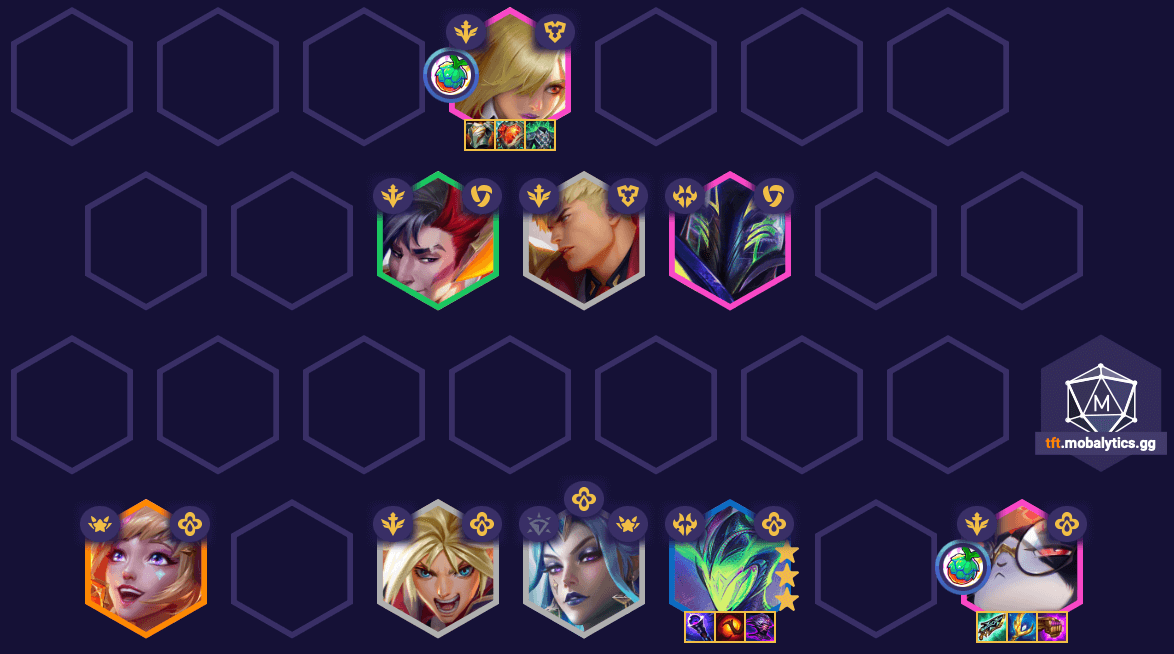
Generic Positioning Rules
- Carry in Backline/Melee Carry in 2nd row
- You generally will place your ranged carrys in the backline. You can opt to place them in the corners or in the middle. It depends if the enemy team has skills that can snipe them or not.
- Frontline strongest outside
- When you have multiple units in your frontline, you usually will want to place the tankiest ones on the outside, and your weaker tanks on the inside. This is to combat enemy boards that place their carries in the corner. Having your strongest tank take the most damage early on will stall longer and allow you to get more value out of your other tanks.
- You also generally want to have your strongest tank closest to your strongest carrys. This will help your carrys take less damage compared to if they’re on the opposite side with a weaker tank.
- Spread vs Clump (Focus Fire vs Balance)
- In general, clumping your units together on one side of the board is not ideal, but that is more so in the late game. In the early game, I prefer to sometimes clump my units closer together to have them focus fire onto one unit, taking them down faster. The faster you can skew the numbers into your favor, the better your early game will be.
- However, in the late game, there are a lot of negatives to clumping. You are susceptible to many CC abilities or even AoE damage abilities if you clump, making a more spread out board advantageous in the late game.
Following these few rules, you should have a fairly decent positioning throughout the game. There are other considerations to make as well, which we’ll go into next.
Intermediate Positioning – Polishing
With the basics out of the way, the next step is to learn how to position against specific enemy boards. In TFT, you are given an indication near enemy HP bars, letting you know what board you may face next.
While this is technically scouting and not positioning, the two things are essentially intertwined. A large part of scouting is to reposition your board, and a large part of positioning is to counter enemy boards.
Counter-Positioning
When looking at an enemy board, there are tons of factors to consider. You can gain an advantage in a variety of ways. There are honestly too many considerations to list.
Overall, it just boils down to minimizing your opponent’s threats, while maximizing your own. Sometimes you can do both at once, other times you can’t avoid it.
In this next portion, I’ll cover just about everything I can think of when it comes to positioning.
Hooks

In TFT, some sets contains a type of hook, either in a champion ability, or an item. These hooks will pull the furthest unit toward them, potentially sniping your backline carry.
In some sets like Set 3, Blitzcrank is a 1-cost unit with this ability. In Set 4, we had Aatrox, a 4-cost unit that pulled the two furthest units. We also previously had the Ornn Artifact, “Rocket-Propelled Fist”, that does the same thing as well.
Hooks are important to scout for and position around, but if you have a hook, there are some creative things you can do as well. Be on the lookout for interesting combos and synergies.
Backline Access Units
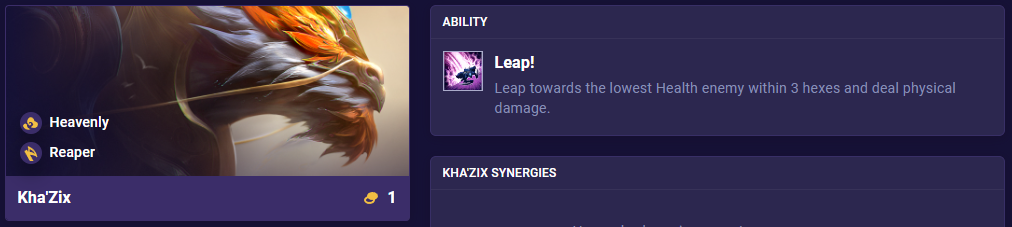
Assassins are no longer present in the game, and we likely won’t see them come back. However, there may still units in the game that can access the backline.
For example, Kha’Zix from Set 11 was able to jump to the lowest Health enemy within 3 hexes. This can be problematic if he jumps onto your backline carry and assassinates them.
There are two main ways to counter Assassin-type units.
- Position your carry away from them.
- You can simply move your carry to the opposite side of wherever you see Kha’Zix. This can work temporarily, but he may eventually jump onto your carry.
- Your opponent can also predict this and move Kha’Zix as well.
- Clump your ranged units together.
- If you have multiple ranged units, you can clump them around your carry.
- This will prevent Kha’Zix from having space to jump toward your carry.
- However, this leaves you susceptible to AoE effects and Kha’Zix might just chew through everyone and reach your carry anyway.
Item Considerations
There have been a fair number of positional-based items throughout TFT’s many sets, many of which have come and gone.
While these items can be generically useful on their own, oftentimes you’ll get way more value once you can align them accordingly to support your team comp.
Ionic Spark/Sunfire Cape
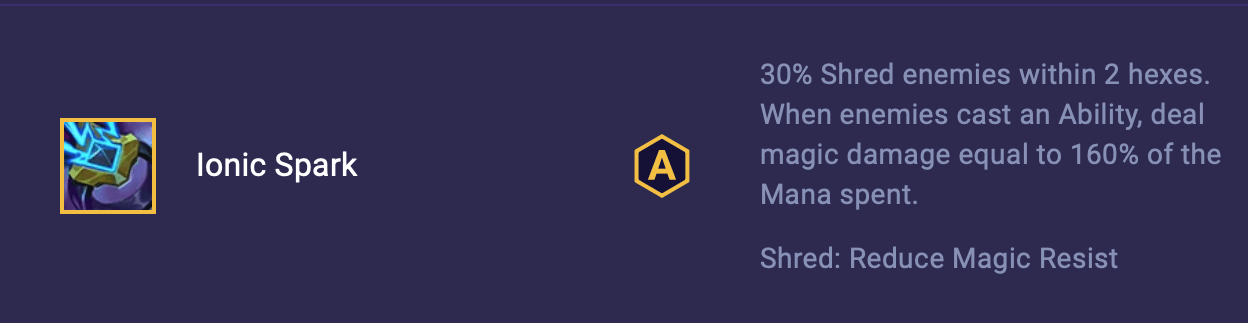
An important thing to note about Sunfire Cape and Ionic Spark is that they both have a range of 2 hexes. If you place them on a normal frontline, you won’t be able to reach the backline with the effects.
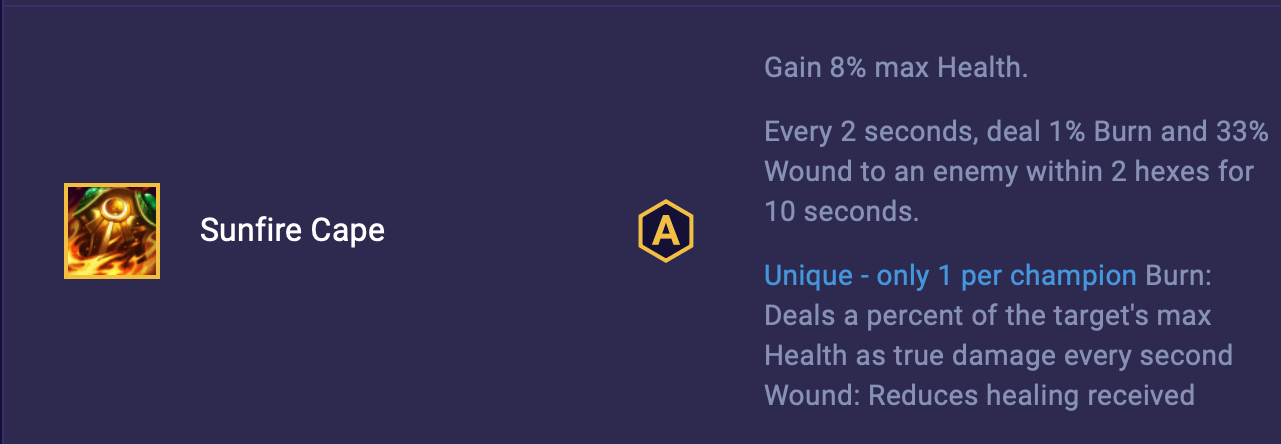
However, if you pair them with a unit that can bypass the frontline, you can get more value out of these items.
Champion Considerations
Champion Targeting
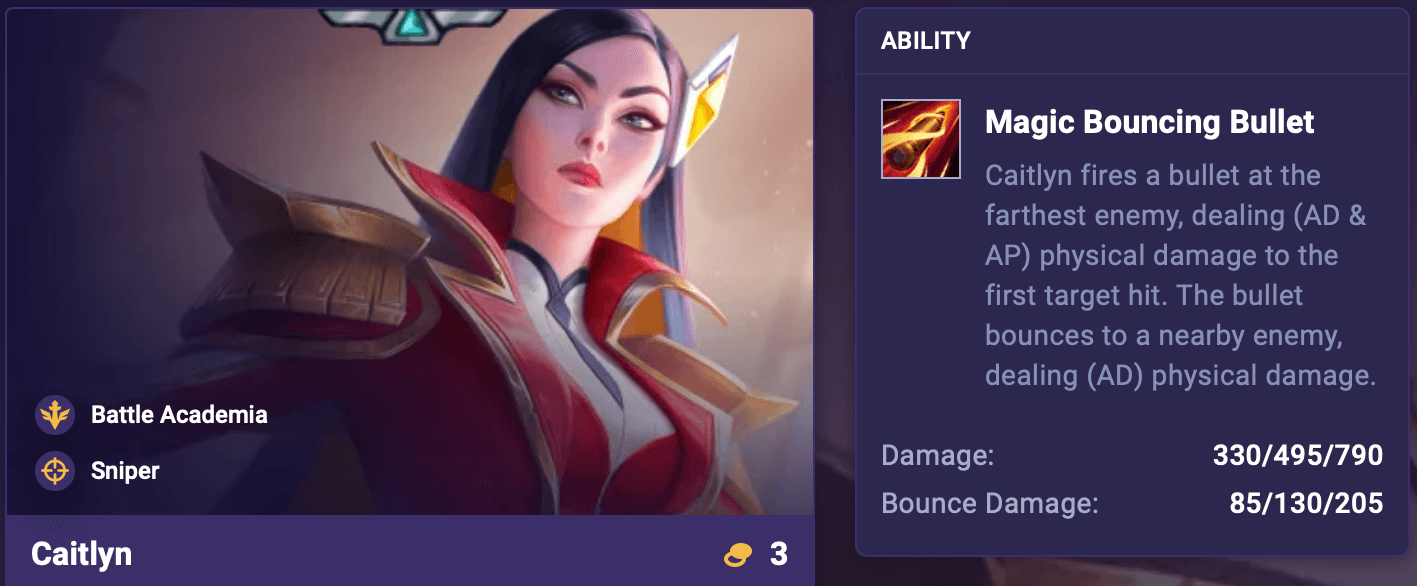
Most Champions in the game cast their ability on their target (the unit they are auto attacking). However, there are exceptions in each Set that you should learn about. Caitlyn targets the farthest unit, but hits the first unit that contacts the ability. In Set 8, Talon will jump to the unit furthest from the center of the board. There are plenty more examples every set.
A lot of champions in the game don’t always cast on their target. Learning all of these and taking them into consideration is important for positioning throughout the game.
Ability Types
There are lots of different types of abilities in the game. Some champions provide utility, such as healing or shielding nearby units. In these situations you want to try and target your most important units with these effects.
Another example are abilities that pierce through enemies and hit everyone in a line, which is quite the contrast to those that aim far but don’t pierce at all (Caitlyn).
Among some of the strongest options are Crowd Control abilities, providing ways to lock down enemies via stuns, knockups, and more.
As you can see, there’s a lot of nuance to your decisions, but as you learn the ins and outs of various champions, you’ll gain more opportunities to exploit them to their fullest.
Augment Considerations

A lot of augments provide buffs similar to that of items. These are all pretty self explanatory. Position in some way to get a buff.
Putting it all together
With all of these things covered, the hard part is putting it all together. How can you decide when to reposition? Should you clump your units for AoE buffs, but be at risk of large AoE abilities? Should you spread out your CC abilities or put them on different sides of the board to put your opponents in a lose lose? Should I place my AP carry in the second row for Battle Mage buff, or place her in the corner where she’s safer?
There are honestly infinite considerations you can make during positioning, and unfortunately, I can’t answer these questions with a rule. As you play more and more, you will learn what worked and what didn’t, and that will ultimately improve your skill.
Advanced Positioning – Refining
Once you’ve learned all the intermediate skills, you can go a long way simply by refining those skills. Positioning well around abilities and items is more than enough to reach even Master tier.
In this section, I’ll be going over other small intricacies that may help give you a slight edge. Even still, these things only affect a tiny portion of the game, so understanding this will only help a little bit. Whereas everything above will help out much more.
Understanding AI
One of the most intriguing things about TFT is actually watching the fights. Usually they play out just about how you expect. Other times, one of your units does something crazy and it ruins your round.
I’m no expert in the fight mechanics, but here are some things I’ve noticed.
Targeting
- When choosing a unit to target, for the most part, units will prioritize the unit that is closest to them, and if not, will walk toward a target.
- If there are two targets that are the same distance, the game likely picks a random target. (This is notable for frontlines when facing off)
- There are other considerations as well.
- If there is no space to attack a unit, the character will retarget to a new unit.
These are just a few of the rules I’ve noticed over my games, but there are definitely plenty more. The more you can learn about how the fight plays out, the better you will be able to position.
Here are just a few examples of things you can do with this information:
- If the opponent has only one frontline, you can surround them with 4 units attacking, and have a melee carry bypass them and move onto the backline.
- You can target abilities with better accuracy.
- You’re able to target the exact unit you want to, taking down priority targets.
The list goes on and on. This is a skill that can be refined and refined and there is no perfect player when it comes to this.
Major positioning changes are hard because other players can react to what you’re doing. But the better you can skew odds in your favor, the more you will climb consistently.
Walking
This one is not so much of an advanced topic, but I thought I should cover it as well. It is extremely important that you minimize the amount of walking that your units need to do. This is especially important if you have a melee carry.
If you place your melee carry in the 3rd or 4th row, you’re giving up valuable time because they need to walk up to hit enemies. Instead, you can figure out what is a safe spot and you can place them in the 2nd or even 1st row sometimes.
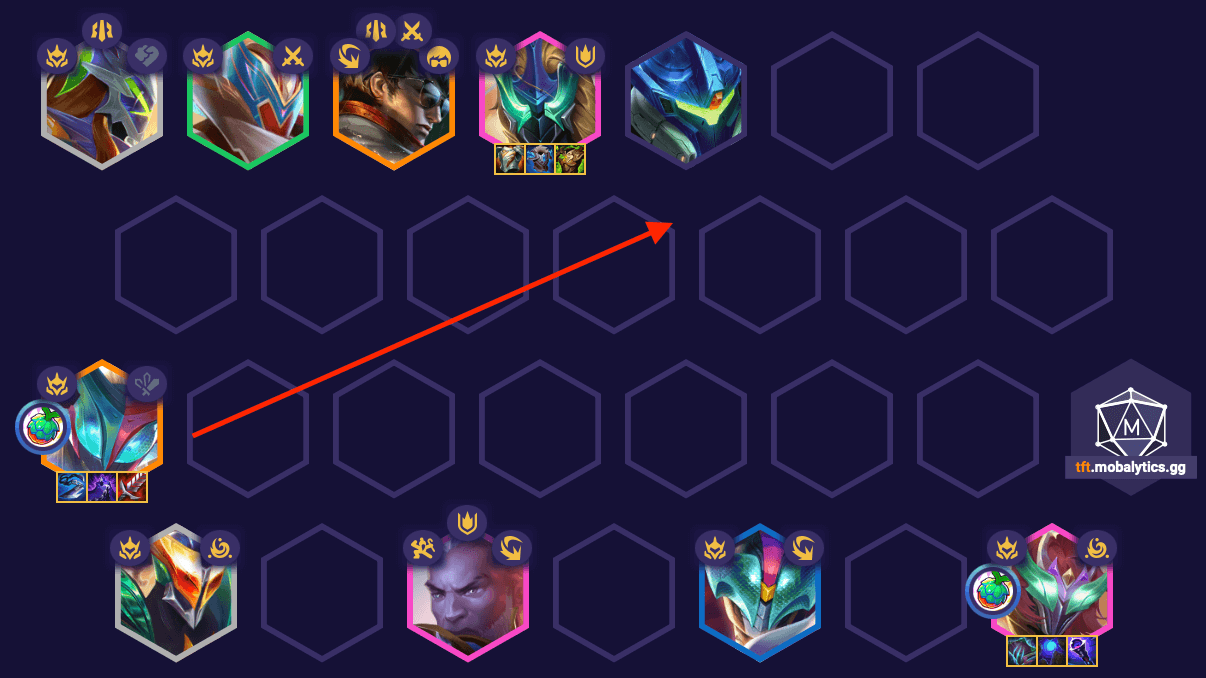
Another common mistake is accidentally blocking a melee unit. If you completely cover the frontline with units and place another unit behind them, place them somewhere where there’s an opening for them to go.
If you cover the right side of the board, don’t place another melee unit on the 2nd row right side. Place them more toward the middle. They’ll need to walk there anyway, so let them get there faster.
Optimizing Frontline and Backline
For the last portion of AI, I’m going to talk about some small intricacies that a large majority of players don’t need to learn. Even still, if you can take advantage of these things, you can gain a small percentage edge over the competition. While this won’t make the difference between a Gold and Diamond player, it can be the difference between a Master and Grandmaster player.
Left Side vs Right Side
One thing that might not seem big is whether to place your units on the right side of the board, the left side of the board, or the middle.
There is only a slight difference between the left and right sides. The bottom right corner and top left corner are further right and left respectively. While this doesn’t matter in most situations, it can come up vs things like a hook or Caitlyn’s ability targeting.
Furthermore, if every opponent in the game is placing their board on one side, should you do the same? Or should you mirror their position on the board. Well, it’s hard to say. Like many things, it’s largely circumstantial. Let me give an example.
Head to Head vs Same Side
If you and an opponent face off with near identical boards, and place your units on the same side, you will end up fighting along a diagonal. This is basically a head to head battle, where both teams will focus fire one unit down first and so on.
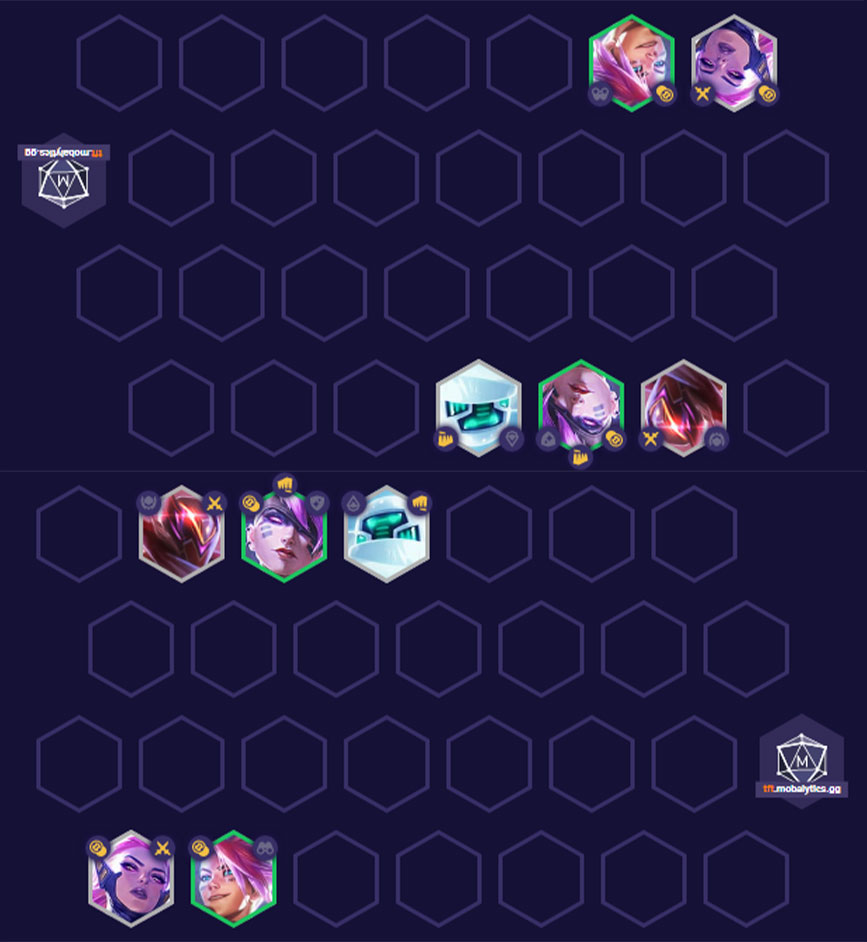
Well, if you reposition and replace your frontline, you can make it so the enemy team targets your strongest frontline, while your team targets the enemy’s weakest frontline. (Let’s assume Blitzcrank is the strongest tank on both sides)
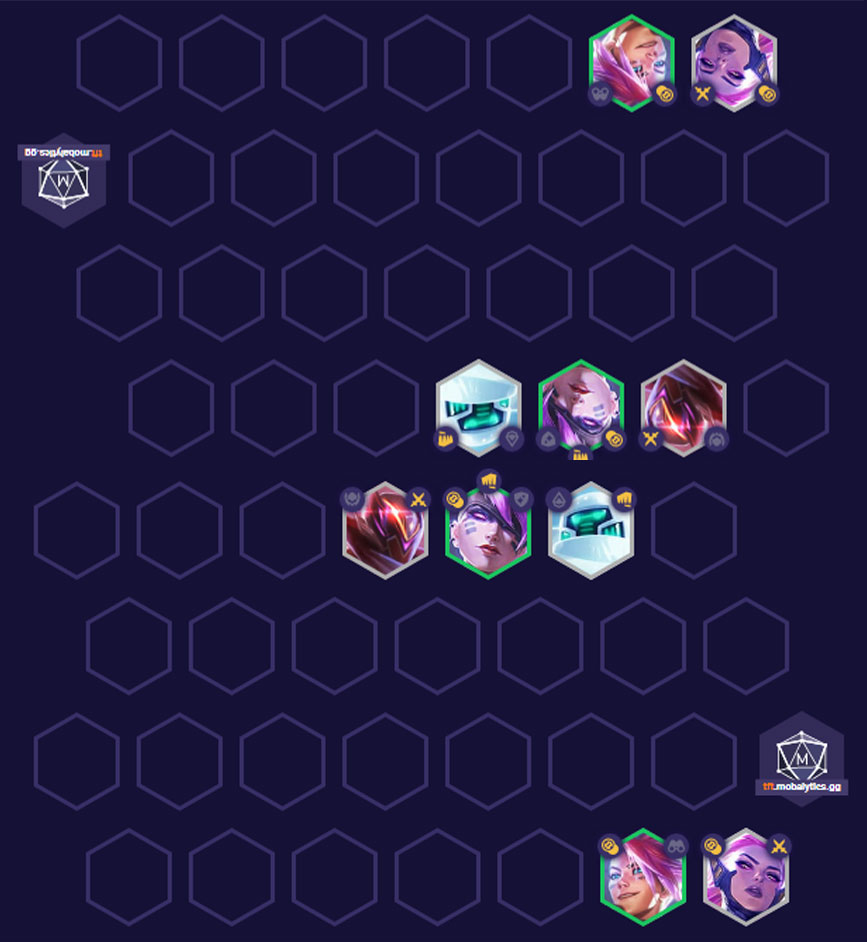
This is an example of a very small edge you can create with repositioning. However, in early game situations, you won’t have a guarantee as to who you will fight. You may reposition for one board, and end up fighting a different board where you are at a disadvantage.
Because of this, you will need to consider every board you might face, and make the best decision to optimize your fight odds.
This is quite tiring to do every round, and every game, so it’s often not done until the mid to late game.
Even still, just making one small decision that saves you 1 HP can be the difference between a 7th and a 3rd. Or it can be the difference between a 5 win streak going into Krugs, or no win streak.
As the game progresses, boards get larger, and gaining small advantages like this get more difficult. However, the more effort you put toward positioning, the more you will gain out of it.
Extra Tips
For this last section, I’ll just be going over anything else related to positioning that I can think of. These will be short and sweet tips, so let’s speedrun them.
- Sometimes placing your carries toward the front is correct, especially when facing Assassin-type units.
- Other times, placing your important carry in the middle back row is a good spot to avoid powerful long range abilities.
- You can try placing your frontline in the 3rd row or even the 2nd row to spread out your opponent’s team and make them walk forward. This will let your backline deal damage right as the fight begins, but your opponent’s frontline will gain mana faster than yours.
Conclusion
That just about wraps up everything I know about positioning. Positioning is a core fundamental skill that every player can improve, even at the highest level. While you may not feel the effects of better positioning every game, over the course of many games, you should start to see improvement.
TFT is a great game because there are so many fundamental skills you can learn and polish. Positioning, Itemization, Pivoting, Economy, and more are all important. Even still, with just generic positioning, you can still make it very high on the ladder if you are strong in other areas.
If you feel like your games aren’t going as well, maybe it’s time to start polishing up other skills you haven’t worked on.
Thanks for reading, and I hope this helps you on your climb.
To learn about the next TFT Set, head to our all-in-one Teamfight Tactics Set 11 reveal page that covers all champions, synergies, and more!
